
After the expulsion from Spain in 1492, women came to play a central role in preserving Jewish–and Sephardic–culture. In the far-flung Spanish disapora, women used songs and story-telling to transmit cutlure and as a form of educating their children.
Their songs reflected the values of the Sephardic culture– longing for the return to Spain, and universal concerns of love, loyalty, and tradition. Their songs also reveal the earthy secularism that was part of the Separdic tradition. In those tens of thousands of households which outwardly converted to Christianity, but secretly continued to practice Judaism, women played an especially crucial and unique role. In traditinoal Judiasm the synagogue was the domain of men and the home was the domain of women, but after “conversion,” the household replaced the synagogue as the spiritual center for Conversos, and as a consequence women ascended to many roles previously held by men: teachers, ritual slaughters, transmitters of ritual and tradition. In the contemporary era, as some of these families and communities have re-embraced Judaism and returned to the synagogue, the change has generated deep strains within family and communal life as men have asserted greater authority at the expense of women.
In her talk, Rivka will explore the role of women in both types of communities, the religious communities in the wake of the Spanish disapora, illustrating some of her points with Sephardic songs and legends.
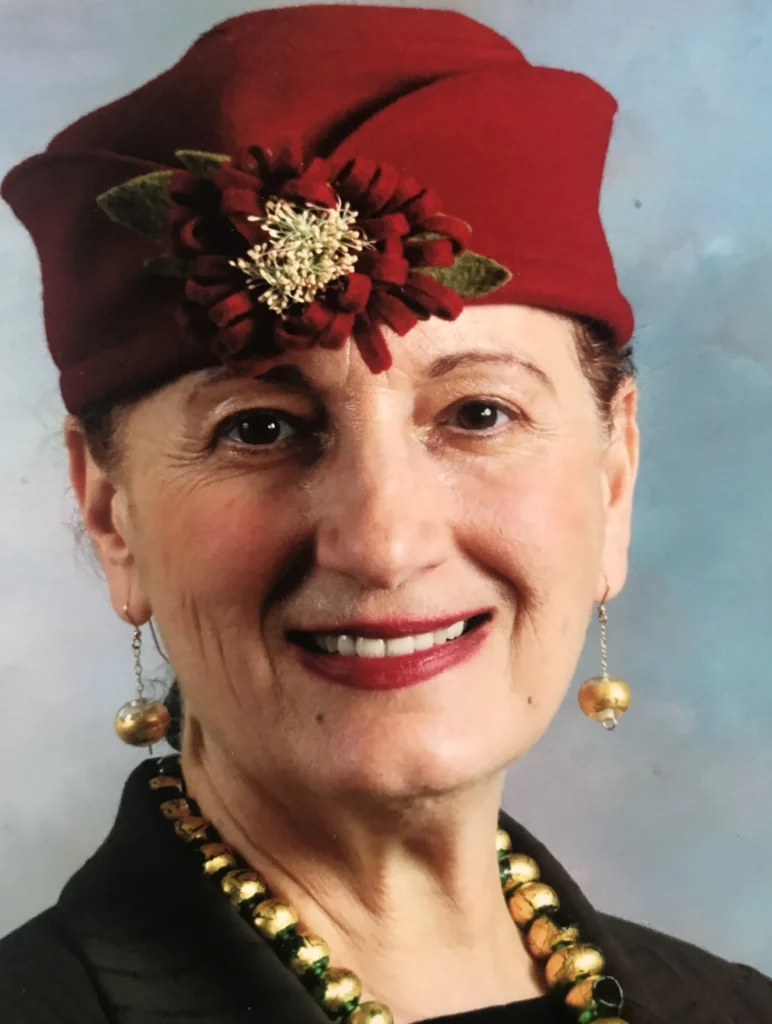
Singer, Poet and Artist Rivka Amado is a retired Professor who earned her PhD in organizational ethics and education in 1990 from University of Toronto, and has held postdoctoral fellowships in medical ethics at the Hastings Center in New York, and the Hebrew University in Jerusalem. Rivka maintained an active musical career inspired by her Sephardic heritage. She has performed in Australia, Spain, Israel, and throughout the United States, including the New York City Sephardic Festival, singing traditional Ladino songs and her own compositions.